We partner exclusively with post-acute and senior care organizations to deliver tailored, high-impact solutions across clinical, financial, and operational domains.
CMS has finalized the FY 2027 Skilled Nursing Facility Prospective Payment System (SNF PPS) rule, effective October 1, 2026. The rule includes a 2.4% net payment update, finalized quality reporting and value-based purchasing changes and a detailed response to the agency's request for information on PDPM case-mix creep. CMS did not impose a new case-mix adjustment for FY 2027, but it published a methodology and potential adjustment factors that give providers a much clearer view of what future rulemaking could look like.
The final rule confirms that CMS remains concerned about average case-mix indices rising faster than changes in resident health status and resource use would appear to support. CMS again highlighted several MDS items that changed sharply after PDPM implementation:
Malnutrition coding (MDS item I5600) increased from 5% of stays before PDPM to
47% in FY 2024.
Swallowing disorder coding (K0100) increased from 4% to 21%.
Depression coding (D0160 or D0600) increased from 4% to 19%.
At the same time, CMS reported declines in median per-diem costs for several components, including physical therapy, occupational therapy, speech-language pathology and non-therapy ancillary services. CMS views the gap between reported acuity and observed resource utilization as evidence that a more systematic review is needed.
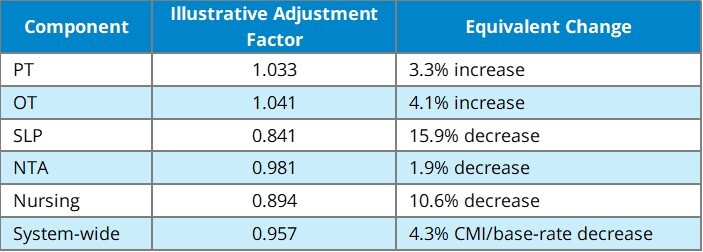
The methodology described in the final rule separates total case-mix change into three parts: real changes in resident health and utilization, broader real-time trends unrelated to PDPM and nominal changes caused by coding or classification practices. CMS then compares an estimated target CMI with the actual CMI to calculate a potential case-mix creep adjustment factor.
The component-level factors shown below are part of CMS's analysis. They were not adopted as FY 2027 payment changes.

CMS received sharply divided comments. Some stakeholders supported action against coding practices that may inflate payments, while others argued that the trends reflect better documentation and a more complex resident population. CMS did not finalize an adjustment. Instead, the agency said it will take the comments under advisement as it considers proposed adjustments in future rulemaking.
Payment Update and PDPM Mappings
The final FY 2027 SNF market basket update is 2.4% after the productivity adjustment. CMS estimates that the rule will increase aggregate SNF payments by approximately $882.74 million during FY 2027. Actual facility-level results will vary based on wage index, case mix, quality reporting compliance and VBP performance.
CMS did not finalize substantive changes to the PDPM ICD-10 code mappings for FY 2027. The agency identified only non-substantive updates and said it will continue to consider several requested reclassifications and additions in future rulemaking.
Value-Based Purchasing (VBP) Updates
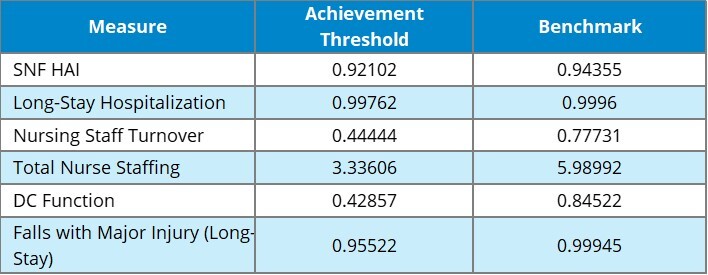
CMS finalized revised snapshot dates for the Falls with Major Injury (Long-Stay) and Discharge Function measures beginning with FY 2027 data. The change aligns the VBP correction process with the faster SNF QRP submission deadline for MDS assessment data. CMS also finalized the following performance standards.
FY 2029 SNF VBP program year:

FY 2030 SNF VBP program year:

Quality Reporting Program (QRP) Changes
The final rule adopts several operational changes that facilities should begin planning for now:
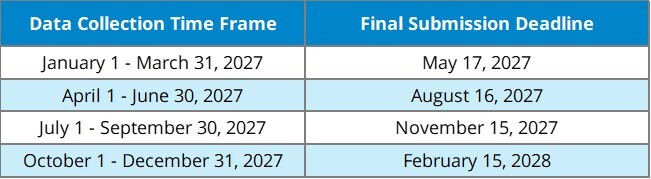
Faster submission deadlines beginning with the FY 2029 SNF QRP. Starting with calendar year 2027 data, MDS assessment data and applicable CDC NHSN data must be submitted and corrected by the 15th day of the second month after the end of each calendar quarter. If that date falls on a weekend or federal holiday, the deadline moves to 11:59 p.m. Eastern Time on the next business day.
All-payer MDS reporting beginning with the FY 2031 SNF QRP. CMS finalized the requirement to submit MDS data for each resident receiving covered skilled care in a SNF, regardless of payer. The policy takes effect October 1, 2029.
Removal of two COVID-19 vaccination measures. CMS finalized removal of the COVID-19 Vaccination Coverage Among Healthcare Personnel measure and the COVID-19 Vaccine: Percent of Patients/Residents Who Are Up to Date measure beginning with the FY 2028 SNF QRP.
Advance care planning remains a future measure concept. CMS summarized comments on a possible advance care planning measure but did not adopt a new measure in this final rule.
The final rule does not change the core QRP compliance thresholds or the payment consequence for failing to report required data:
MDS assessment data: at least 90% of assessments submitted to iQIES must contain 100% of the required measures and standardized patient assessment data.
NHSN data: 100% of data submitted to CDC's National Healthcare Safety Network must contain 100% of the required data elements.
Facilities that do not meet the applicable reporting requirements remain subject to a two-percentage-point reduction in their Annual Payment Update. Because the penalty is applied in a later payment year, current data quality and submission problems can create future reimbursement losses.
For MDS assessment data collected in calendar year 2027, CMS finalized the following submission deadlines:

The practical takeaway is simple: facilities should treat the revised deadline as the real deadline. Data validation, correction and internal approval workflows will need to happen much closer to the end of each quarter.
Audit the coding CMS flagged. Review malnutrition, swallowing disorder, depression and other high-impact MDS coding. Confirm that the medical record supports the condition, the coding decision and the care delivered.
Compare CMI growth with resource use. Look at facility-level CMI trends alongside nursing, therapy and NTA costs. A widening gap between reported acuity and actual resource use may attract scrutiny under the framework CMS described.
Redesign the QRP close process. Map backward from the new 45-day deadline and assign clear ownership for assessment completion, validation, corrections and final submission before calendar year 2027 data collection begins.
Build the all-payer workflow early. Identify which systems, staffing processes and resident assessment practices must change before the October 1, 2029 effective date. Waiting until FY 2031 is too late because the underlying collection requirement begins earlier.
Model the combined payment impact. Do not treat the 2.4% update as a guaranteed facility-level increase. Factor in wage index changes, case mix, QRP compliance and VBP performance when preparing the FY 2027 budget.
The FY 2027 final rule does not impose an immediate case-mix creep cut, but it moves the issue from a general warning to a defined analytical framework with published adjustment factors. Facilities with accurate coding, clear clinical support and reliable data processes will be in the strongest position if CMS returns with a formal payment proposal.
Questions about how the final rule affects your facility? Reach out to our clinical consulting team here. We're happy to help you assess your exposure and build an action plan.
To learn more about Richter’s accounting, outsourced revenue cycle management or reimbursement consulting services, contact us at info@richterhc.com or click here to schedule a conversation.
Subscribe to our newsletter to receive the latest articles and updates aimed at helping you enhance operational, clinical and financial outcomes.